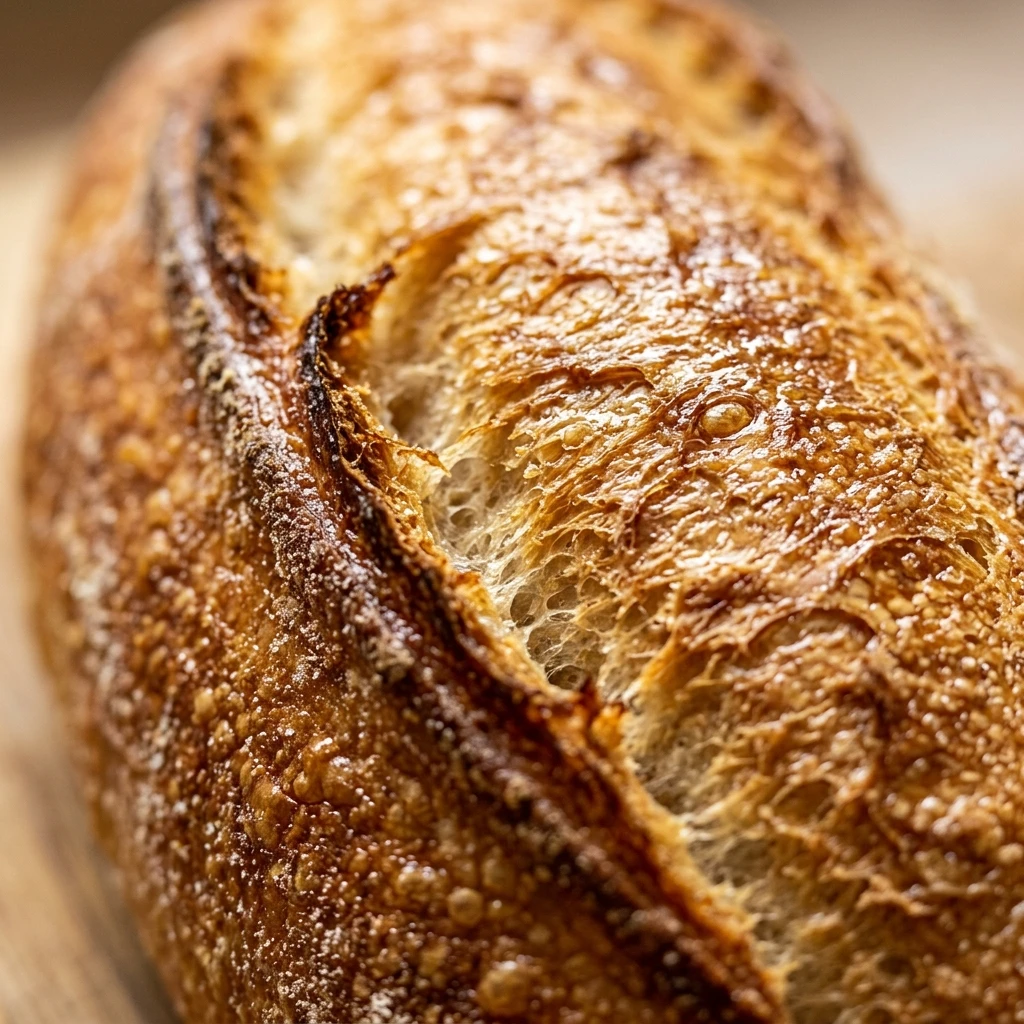

There is nothing quite like the smell of fresh bread baking in your oven. A classic French bread recipe is a staple for any home baker. With its signature golden, crispy crust and soft, airy center, this bread is perfect for everything from dinner sides to gourmet sandwiches. You do not need to be a professional baker to master this recipe; all it takes is a few simple pantry staples and a little bit of patience.
Making your own bread at home is incredibly rewarding. This recipe yields two beautiful loaves that look like they came straight from a Parisian bakery. Whether you are serving it alongside a bowl of hot soup or using it to make the ultimate French toast, this bread will quickly become a favorite in your household. Let’s get started on baking the perfect loaf.
Recipe Information
- Prep Time: 2 hours 15 minutes
- Cook Time: 25 minutes
- Total Time: 2 hours 40 minutes
- Servings: 12 slices per loaf (24 total)
- Difficulty Level: Medium
Nutrition Information
- Calories per serving: 185 kcal
- Protein: 5g
- Carbohydrates: 38g
- Fat: 1g
- Fiber: 2g
- Sugar: 1g
- Sodium: 295mg
Why Make This french bread recipe
One of the best reasons to make this French bread recipe is the complete control you have over the ingredients. Store-bought breads often contain preservatives and additives to keep them shelf-stable. When you bake at home, you are using just flour, water, yeast, and salt. This results in a cleaner, more authentic flavor that truly shines through in every bite.
Additionally, baking bread is a therapeutic process. Kneading the dough and watching it rise is a great way to slow down and enjoy the kitchen. Plus, the cost of making two large loaves at home is a fraction of what you would pay at a high-end grocery store. It is economical, delicious, and brings a touch of warmth to your home.
How to Make french bread recipe
Creating that iconic crusty exterior and chewy interior is easier than you think. Follow these simple steps to transform basic ingredients into a professional-quality loaf of bread.
Ingredients
- 2 ¼ teaspoons active dry yeast (1 packet)
- 1 ½ cups warm water (105-110°F)
- 1 tablespoon granulated sugar
- 1 ½ teaspoons salt
- 4 cups bread flour (all-purpose also works)
- 1 tablespoon olive oil (for the bowl)
- 1 egg white (for the egg wash)
- 1 tablespoon cornmeal (for the baking sheet)
Directions
Step 1: Activate the Yeast
In a large bowl or the bowl of a stand mixer, combine the warm water, sugar, and yeast. Stir gently and let it sit for about 5 to 10 minutes until the mixture becomes foamy. This “blooming” process ensures your yeast is active and ready to make the dough rise.
Step 2: Mix the Dough
Add the salt and about 2 cups of flour to the yeast mixture. Using a dough hook or a sturdy spoon, mix until combined. Gradually add the remaining flour, half a cup at a time, until the dough begins to pull away from the sides of the bowl and forms a cohesive ball.
Step 3: Knead the Dough
Turn the dough out onto a lightly floured surface. Knead by hand for about 8 to 10 minutes, or use a stand mixer on medium-low speed for 5 minutes. The dough should be smooth, elastic, and slightly tacky to the touch, but it should not stick to your fingers.
Step 4: First Rise
Lightly grease a large bowl with olive oil. Place the dough inside, turning it once to coat it in oil. Cover the bowl with a clean kitchen towel or plastic wrap. Let it rise in a warm, draft-free spot for about 1 hour, or until it has doubled in size.
Step 5: Shape the Loaves
Gently punch down the dough to release the air. Divide it into two equal portions. On a floured surface, roll each portion into a long rectangle, then roll it up tightly starting from the long side to create a 12-inch log. Pinch the seams and ends to seal them.
Step 6: Second Rise
Sprinkle a baking sheet with cornmeal. Place the two loaves on the sheet, seam-side down. Cover them lightly and let them rise again for about 45 minutes to 1 hour until they look puffy and nearly doubled in size.
Step 7: Score and Bake
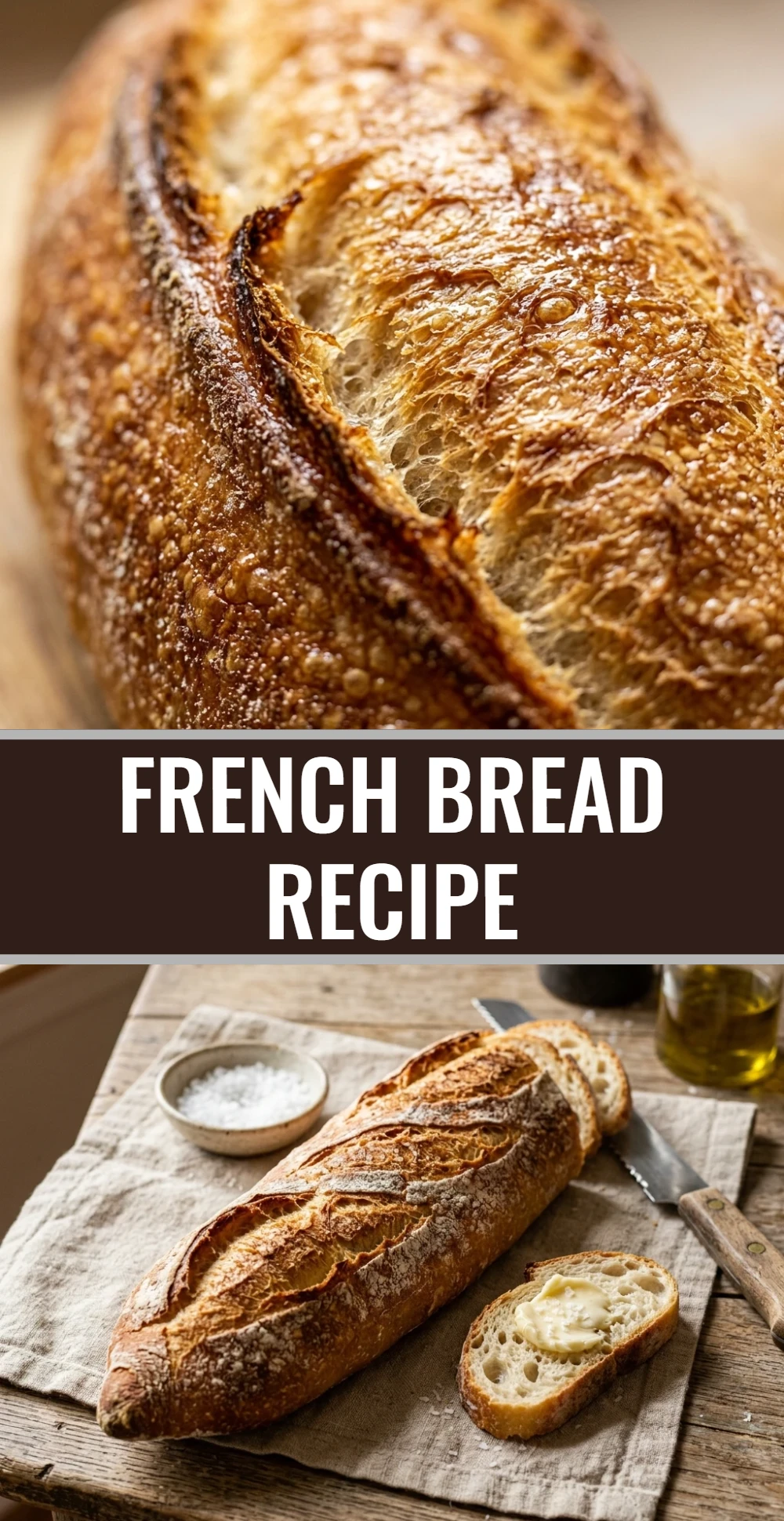
Preheat your oven to 400°F (200°C). Using a sharp knife or a razor blade, make 3 or 4 diagonal slashes across the top of each loaf. Whisk the egg white with a teaspoon of water and brush it over the tops. Bake for 20 to 25 minutes until the crust is deep golden brown and the loaves sound hollow when tapped on the bottom.
How to Serve french bread recipe
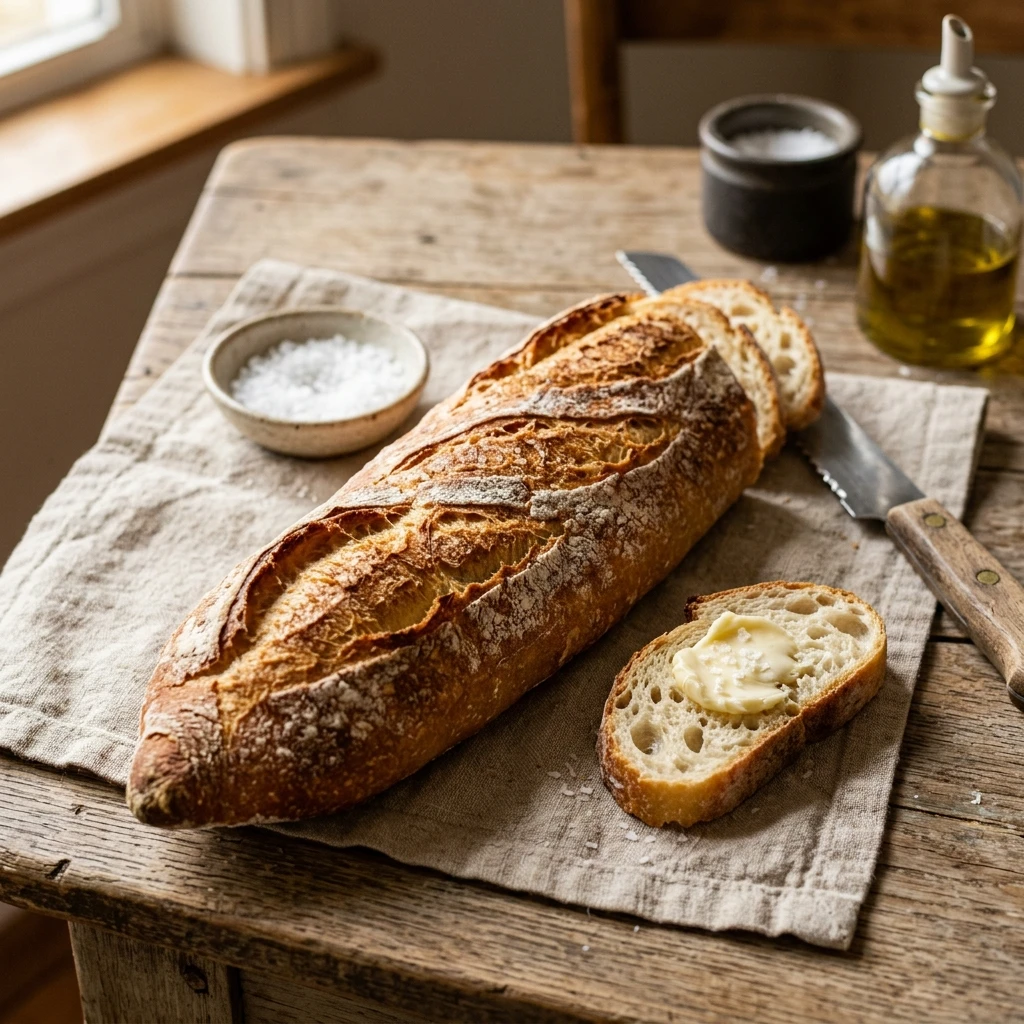
French bread is best served slightly warm from the oven. You can slice it thickly and serve it with salted butter or a dip of olive oil and balsamic vinegar. It is the perfect accompaniment to hearty stews, pasta dishes, or a fresh garden salad. For a simple lunch, use it as a base for an open-faced sandwich or a classic sub.
How to Store french bread recipe
To keep your bread fresh, store it in a paper bag at room temperature for up to 2 days. Avoid plastic bags, as they can make the crust soft and soggy. If you want to keep it longer, wrap the loaf tightly in aluminum foil and freeze it for up to 3 months. When you are ready to eat, reheat the frozen loaf in a 350°F oven for 10 minutes to restore the crispy crust.
Expert Tips for Perfect french bread recipe
For the best results, use bread flour instead of all-purpose flour. Bread flour has a higher protein content, which creates more gluten and results in a chewier, more authentic texture. Another great tip is to place a shallow pan of water on the bottom rack of the oven while baking. The steam created will help the bread achieve that signature thin, crispy crust.
Delicious Variations
You can easily customize this recipe to suit your taste. Try adding a tablespoon of dried rosemary or thyme to the dough for an herbal twist. You can also sprinkle the top with sesame seeds, poppy seeds, or even everything bagel seasoning after applying the egg wash. For a cheesy version, sprinkle shredded parmesan over the loaves during the last five minutes of baking.
Frequently Asked Questions
Q: Why didn’t my bread rise?
This usually happens if the water was too hot (killing the yeast) or too cold (not activating it). Ensure your water is between 105°F and 110°F. Also, check the expiration date on your yeast package.
Q: Can I make this recipe without a stand mixer?
Yes! You can easily mix and knead this dough by hand. It takes a little more physical effort, but it works perfectly and is a great way to get a feel for the dough’s texture.
Q: How do I get a really crunchy crust?
Using the steam method (placing a pan of water in the oven) is the best way. You can also spray the loaves with a fine mist of water a few times during the first 10 minutes of baking.
Q: Can I use honey instead of sugar?
Yes, you can substitute the tablespoon of sugar with a tablespoon of honey. It will provide a slightly different flavor profile and help feed the yeast just as well.
Q: Why is my bread dense?
Density is often caused by adding too much flour. Measure your flour by spooning it into the measuring cup and leveling it off, rather than scooping directly from the bag, which packs the flour down.
Conclusion
Mastering a homemade French bread recipe is a skill that will serve you well for years to come. There is a special kind of pride that comes with pulling two perfect, golden loaves out of your own oven. Whether you are a beginner or an experienced baker, this recipe is straightforward and yields impressive results every time. Happy baking!
french bread recipe
- Cook Time: 30 minutes
- Total Time: 30 minutes
- Diet: None
Ingredients
- Refer to article content.
Instructions
- See article directions list.