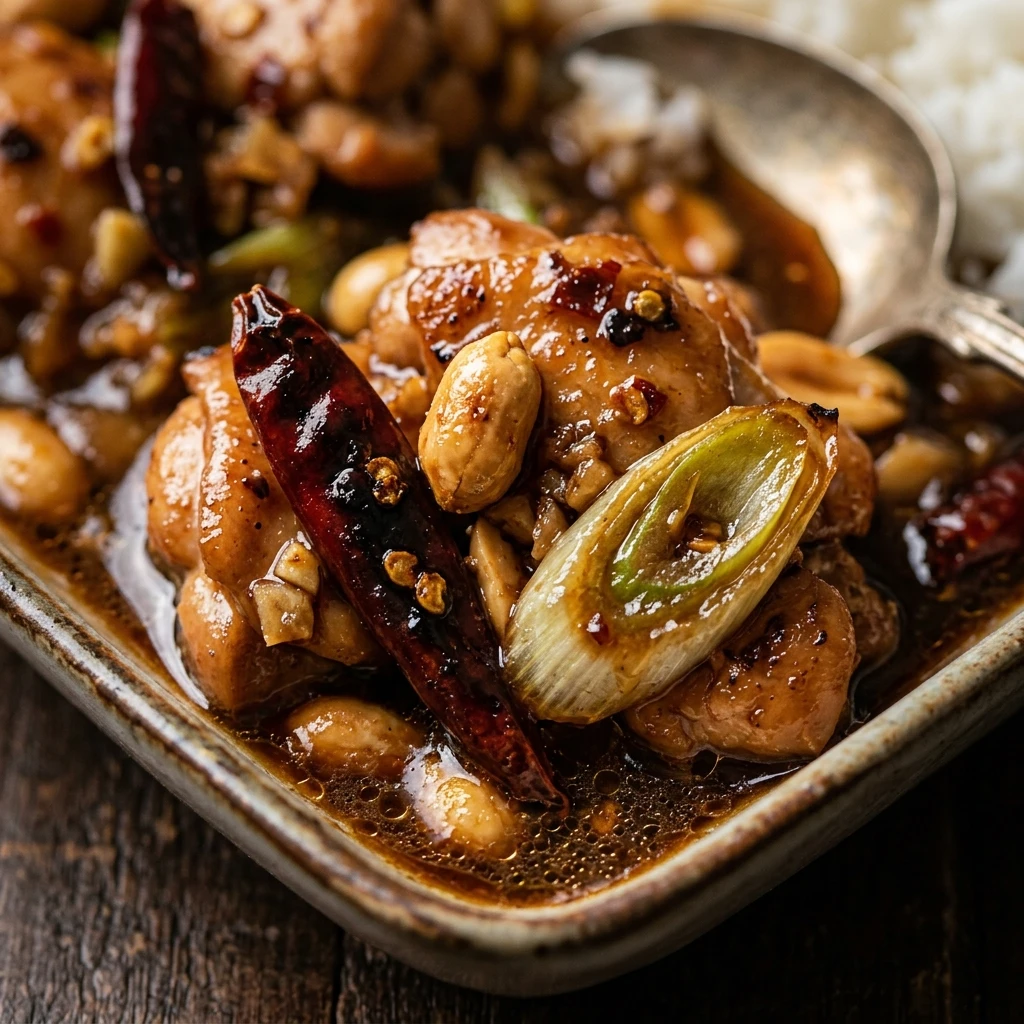

Kung Pao Chicken is a world-famous Chinese stir-fry dish that perfectly balances spicy, sweet, and savory flavors. Originating from the Sichuan province, this dish is beloved for its signature combination of tender chicken, crunchy peanuts, and the mouth-numbing heat of Sichuan peppercorns. It is a staple in Chinese restaurants, but making it at home allows you to control the spice level and freshness of the ingredients.
This recipe brings the authentic taste of a traditional stir-fry right to your kitchen. With a glossy sauce that coats every morsel and a vibrant mix of vegetables, it is a meal that looks as good as it tastes. Whether you are a fan of spicy food or just looking for a quick weeknight dinner, this Kung Pao chicken recipe will quickly become a favorite in your household.
Recipe Information
- Prep Time: 20 minutes
- Cook Time: 10 minutes
- Total Time: 30 minutes
- Servings: 4
- Difficulty Level: Medium
Nutrition Information
- Calories per serving: 385 kcal
- Protein: 32g
- Carbohydrates: 14g
- Fat: 22g
- Fiber: 3g
- Sugar: 6g
- Sodium: 980mg
Why Make This kung pao chicken recipe
Making this Kung Pao chicken recipe at home is much healthier and more rewarding than ordering takeout. You can ensure that the chicken is high-quality and the oil is fresh. Plus, you can customize the heat—add more dried chilies for a fiery kick or keep it mild for the kids. It is a fantastic way to enjoy restaurant-quality food without the extra sodium and preservatives often found in commercial versions.
Another reason to love this recipe is how fast it comes together. Once your ingredients are prepped, the actual cooking time is less than ten minutes. This makes it an ideal solution for busy evenings when you want a nutritious, protein-packed meal that does not require hours in the kitchen. The combination of textures—the soft chicken and the crunchy peanuts—is simply addictive.
How to Make kung pao chicken recipe
Preparing this dish is all about speed and timing. The secret lies in “velveting” the chicken to keep it moist and having your sauce pre-mixed before you even turn on the stove. Follow these steps to achieve that perfect glossy finish and authentic Sichuan flavor profile.
Ingredients
- 1 lb boneless skinless chicken thighs or breast, cut into 1-inch cubes
- 1 tablespoon soy sauce (for marinade)
- 1 tablespoon Chinese cooking wine or dry sherry
- 2 teaspoons cornstarch
- 1/2 cup roasted unsalted peanuts
- 8-10 dried Sichuan chilies, snipped and seeds removed
- 1 teaspoon Sichuan peppercorns, lightly toasted and crushed
- 3 cloves garlic, minced
- 1 tablespoon fresh ginger, grated
- 2 green onions, sliced (whites and greens separated)
- 1 bell pepper, cut into chunks
- 2 tablespoons vegetable oil
- For the sauce:
- 2 tablespoons soy sauce
- 1 tablespoon dark soy sauce
- 1 tablespoon Chinkiang black vinegar (or balsamic vinegar)
- 1 tablespoon granulated sugar
- 1 teaspoon sesame oil
- 1 teaspoon cornstarch
Directions
Step 1: Marinate the Chicken
In a medium bowl, combine the cubed chicken with one tablespoon of soy sauce, the cooking wine, and two teaspoons of cornstarch. Stir well to coat and let it sit for at least 15 minutes. This process, known as velveting, ensures the chicken remains tender during high-heat frying.
Step 2: Prepare the Kung Pao Sauce
In a small bowl, whisk together the soy sauce, dark soy sauce, black vinegar, sugar, sesame oil, and one teaspoon of cornstarch. Ensure the sugar and cornstarch are fully dissolved. Set this mixture aside so it is ready to pour when the wok is hot.
Step 3: Sear the Chicken
Heat one tablespoon of oil in a wok or large skillet over high heat. Add the marinated chicken in a single layer. Sear until browned and cooked through, about 4-5 minutes. Remove the chicken from the wok and set it aside on a plate.
Step 4: Bloom the Aromatics
Wipe out the wok and add the remaining tablespoon of oil. Lower the heat to medium. Add the dried chilies and Sichuan peppercorns. Stir for about 30 seconds until the chilies darken slightly and become fragrant. Be careful not to burn them.
Step 5: Stir-fry the Vegetables
Turn the heat back up to high. Add the garlic, ginger, the white parts of the green onions, and the bell peppers. Stir-fry for 1-2 minutes until the vegetables are slightly softened but still crisp.
Step 6: Combine and Thicken
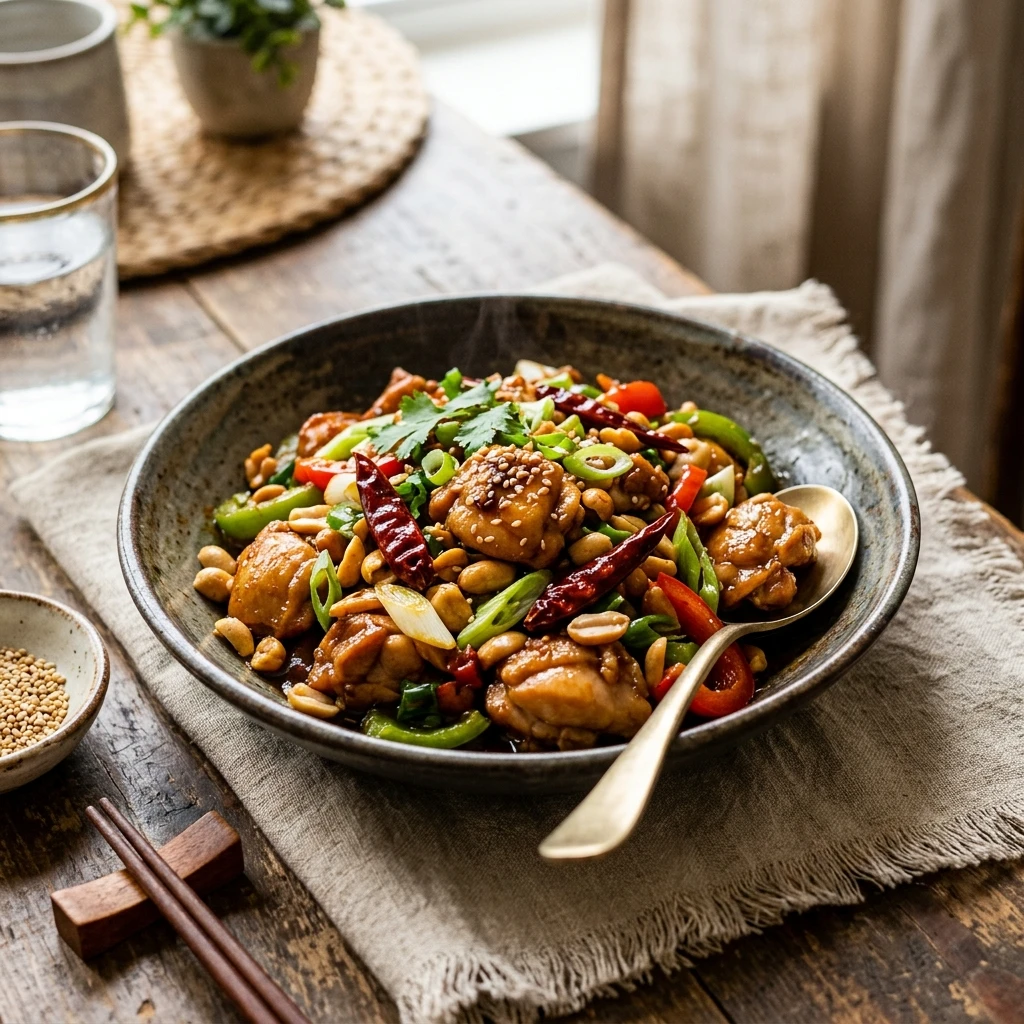
Add the cooked chicken back into the wok along with the peanuts. Give the sauce mixture a quick stir and pour it over the ingredients. Toss everything continuously for 1 minute until the sauce thickens and coats the chicken beautifully. Garnish with the green parts of the onions and serve immediately.
How to Serve kung pao chicken recipe
The best way to serve Kung Pao chicken is over a steaming bowl of jasmine rice. The fluffy rice soaks up the savory sauce perfectly. For a lower-carb option, you can serve it with cauliflower rice or inside large lettuce cups for a refreshing crunch. If you want a full Chinese feast, pair it with a side of stir-fried bok choy or a simple egg drop soup.
How to Store kung pao chicken recipe
If you have leftovers, store them in an airtight container in the refrigerator for up to 3 days. To reheat, it is best to use a skillet over medium heat with a splash of water to loosen the sauce. Microwave heating also works, but the peanuts may lose some of their crunchiness. This dish is not recommended for freezing, as the texture of the peppers and peanuts can become mushy upon thawing.
Expert Tips for Perfect kung pao chicken recipe
To get that authentic restaurant flavor, try to find Chinkiang black vinegar; it has a smoky depth that white vinegar lacks. Always have all your ingredients chopped and ready before you start cooking, as stir-frying happens very fast. If you prefer a less spicy dish, leave the dried chilies whole instead of snipping them open, as most of the heat is in the seeds. Lastly, use chicken thighs rather than breasts for a juicier, more flavorful result.
Delicious Variations
While chicken is the classic choice, you can easily swap it for shrimp or firm tofu for a different protein profile. If you love vegetables, feel free to add diced celery, zucchini, or water chestnuts for extra texture. For those who cannot eat peanuts, toasted cashews or macadamia nuts provide a similarly delightful crunch and buttery flavor.
Frequently Asked Questions
Q: Is Kung Pao chicken very spicy?
It can be, but you can control the heat. The spice comes from the dried chilies and Sichuan peppercorns. If you remove the seeds from the chilies, the dish becomes much milder.
Q: What can I use if I don’t have Sichuan peppercorns?
While they have a unique numbing quality, you can substitute them with a mix of black peppercorns and a tiny bit of lemon zest for a similar citrusy note, though it won’t have the “tingle.”
Q: Can I use balsamic vinegar instead of black vinegar?
Yes, balsamic vinegar is a good substitute because it shares the slight sweetness and dark color of Chinese black vinegar, though it is slightly more acidic.
Q: Do I have to use cornstarch?
The cornstarch is essential for both tenderizing the chicken and thickening the sauce. Without it, the sauce will be watery and won’t stick to the ingredients.
Q: Are the dried chilies meant to be eaten?
Usually, the dried chilies are meant to flavor the oil and the dish, but they are often left on the side of the plate. However, if you enjoy extreme heat, you can eat them!
Conclusion
This Kung Pao chicken recipe is a masterclass in balancing complex flavors with simple cooking techniques. With its vibrant colors, aromatic spices, and satisfying crunch, it is a dish that truly excites the palate. By making it at home, you bring a piece of authentic Sichuan cuisine to your dinner table. Enjoy the process of stir-frying and the delicious, spicy reward at the end!
kung pao chicken recipe
- Cook Time: 30 minutes
- Total Time: 30 minutes
- Diet: High-Protein, Low-Carb Option
Ingredients
- 1 lb boneless skinless chicken thighs or breast, cut into 1-inch cubes
- 1 tablespoon soy sauce (for marinade)
- 1 tablespoon Chinese cooking wine or dry sherry
- 2 teaspoons cornstarch
- 1/2 cup roasted unsalted peanuts
- 8–10 dried Sichuan chilies, snipped and seeds removed
- 1 teaspoon Sichuan peppercorns, lightly toasted and crushed
- 3 cloves garlic, minced
- 1 tablespoon fresh ginger, grated
- 2 green onions, sliced (whites and greens separated)
- 1 bell pepper, cut into chunks
- 2 tablespoons vegetable oil
- For the sauce:
- 2 tablespoons soy sauce
- 1 tablespoon dark soy sauce
- 1 tablespoon Chinkiang black vinegar (or balsamic vinegar)
- 1 tablespoon granulated sugar
- 1 teaspoon sesame oil
- 1 teaspoon cornstarch
Instructions
- Marinate the Chicken: In a medium bowl, combine the cubed chicken with one tablespoon of soy sauce, the cooking wine, and two teaspoons of cornstarch. Stir well to coat and let it sit for at least 15 minutes. This process, known as velveting, ensures the chicken remains tender during high-heat frying.
- Prepare the Kung Pao Sauce: In a small bowl, whisk together the soy sauce, dark soy sauce, black vinegar, sugar, sesame oil, and one teaspoon of cornstarch. Ensure the sugar and cornstarch are fully dissolved. Set this mixture aside so it is ready to pour when the wok is hot.
- Sear the Chicken: Heat one tablespoon of oil in a wok or large skillet over high heat. Add the marinated chicken in a single layer. Sear until browned and cooked through, about 4-5 minutes. Remove the chicken from the wok and set it aside on a plate.
- Bloom the Aromatics: Wipe out the wok and add the remaining tablespoon of oil. Lower the heat to medium. Add the dried chilies and Sichuan peppercorns. Stir for about 30 seconds until the chilies darken slightly and become fragrant. Be careful not to burn them.
- Stir-fry the Vegetables: Turn the heat back up to high. Add the garlic, ginger, the white parts of the green onions, and the bell peppers. Stir-fry for 1-2 minutes until the vegetables are slightly softened but still crisp.
- Combine and Thicken: Add the cooked chicken back into the wok along with the peanuts. Give the sauce mixture a quick stir and pour it over the ingredients. Toss everything continuously for 1 minute until the sauce thickens and coats the chicken beautifully. Garnish with the green parts of the onions and serve immediately.